Marine vs Bovine Collagen: What Actually Differs

Marine collagen comes from fish skin and scales, bovine collagen from cattle hide and bones. The difference that matters most is the source: it sets the collagen types and the allergen picture. We know of no head-to-head trial showing one works better.
This guide compares the two on source, types, allergens, evidence and labels. We make Women Bloom, a beef organ supplement with 500 mg of bovine collagen peptides per serving, so we say up front that ours is bovine, and why that is a sourcing fact, not a claim that bovine wins.
The short version
Marine and bovine collagen are two animal sources of the same protein, and the research does not rank them. Fish suits people who avoid beef, beef suits people who avoid fish, and fish is a major allergen. Our collagen is bovine, 500 mg per serving.
What is the difference between marine and bovine collagen?
Marine collagen is extracted from fish skin, scales and bones, while bovine collagen is extracted from cattle hide and bones. Both are sold as peptides. They differ in source animal, usual collagen types, allergen profile and dietary fit, not in any proven difference in results.

A 2024 review in the Journal of Food Science presents marine collagen, taken from fish skins, scales and bones, as a potential alternative to mammalian sources. It lists disease-transmission worries, allergic reactions and religious constraints as reasons researchers look beyond bovine and porcine collagen. That is a motive for research, not a finding that one source performs better in people.
Which collagen types does each source supply?
Bovine collagen peptides are usually sold as types I and III, the two types that dominate cattle skin and connective tissue. Marine collagen is most often described as type I. A label that names types hints at the source, but only the supplier can confirm which animal it came from.
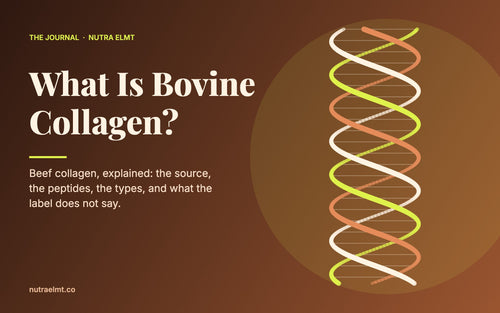
We explain what the types are in collagen type 1 and 3, explained simply, and the source in what bovine collagen is. The practical point here is narrow: the type printed on a panel is a clue, not proof of the animal.
Is marine collagen absorbed better than bovine collagen?
We know of no head-to-head human trial that shows it. Claims of better absorption usually rest on smaller peptide size, which depends on how the collagen is processed, not on the animal. Size, dose and processing matter more than the word marine or bovine.
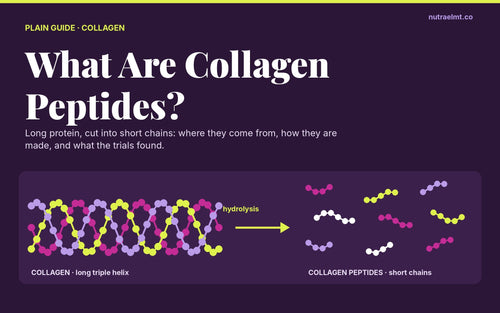
A supplier can make short peptides from either animal, and a poorly processed product from either can be large. Our panel does not state a process for our collagen, so we make no claim about it. If you want the basics of what peptides are, start with what collagen peptides are.
Do studies show marine or bovine collagen works better for skin or hair?
No study we know of compares them head to head. The skin reviews pool collagen products, and their verdict is contested: a 2023 meta-analysis of 26 trials reported benefits, while a 2025 review found no effect in the independent trials. Hair evidence is thinner still.
Pu and colleagues pooled 26 trials with 1,721 people (PubMed 37432180). Myung and Park pooled 23 trials with 1,474 people and found no effect in the independent, better-quality trials, though industry disputes how those trials were classified (PubMed 40324552). Both camps deserve a hearing, and neither tested marine against bovine.
What dose do trials use?
Trials often use 2,500 mg a day or more. Our 500 mg is not a trial dose, and we never present it as a skin or hair dose.*
Does the source change allergy and dietary fit?
Yes, and it is the clearest difference. Fish is one of the nine major food allergens the FDA lists, so marine collagen is a poor fit for a fish allergy. Bovine collagen avoids fish but comes from cattle, so it rules out vegetarians. Neither suits a vegan diet.
The FDA names the nine major allergens on its food allergies page: milk, eggs, fish, crustacean shellfish, tree nuts, peanuts, wheat, soybeans and sesame. If you have any allergy, read the full ingredient list and talk to your physician or allergist before starting a collagen supplement.
How can you tell which collagen is in a supplement?
Read four lines: the source animal, the collagen types, the process and the dose per serving. Many labels print only a type and a weight. When the animal is not named, ask the brand, and treat a vague answer as a vague label.

Ours reads “Collagen Peptides Type I & III, 500 mg,” exactly as printed, and it does not name the animal. We have confirmed it is bovine, from cattle. The panel states no process, so we do not call it hydrolyzed, and we make no grass-fed claim for it. The full panel is on our Supplement Facts page, and our supplier documents are on the Lab Tests page.
Should you choose marine or bovine collagen?
Choose by constraint, not by a claimed winner. A fish allergy or beef avoidance decides it first. After that, compare the dose, the named source and the cost per gram of collagen. With no head-to-head evidence, the better label is the one you can verify.
If a brand cannot tell you the animal, the type and the dose, that is the signal to look elsewhere, whichever source it sells.
What is the practical takeaway on marine vs bovine collagen?
Marine and bovine collagen differ in source, usual types and allergen fit, and no trial we know of ranks them. Treat the choice as a sourcing and dietary decision. Women Bloom uses bovine collagen at 500 mg per serving, which is not a trial dose.
Collagen is a protein, and what a supplement can say about your body is a separate question from which animal it came from.* We state the source plainly and stop where our proof stops. Talk to your physician before starting any supplement, especially if you are pregnant, nursing or on medication.
Last reviewed: 9 November 2026. This article is general information, not medical advice.
*These statements have not been evaluated by the Food and Drug Administration. This product is not intended to diagnose, treat, cure, or prevent any disease.
Keep reading
*These statements have not been evaluated by the Food and Drug Administration. This product is not intended to diagnose, treat, cure, or prevent any disease. This article is for informational purposes only and is not medical advice. Speak with your healthcare provider before starting any supplement, especially if you are pregnant, nursing, taking medication, or managing a medical condition.